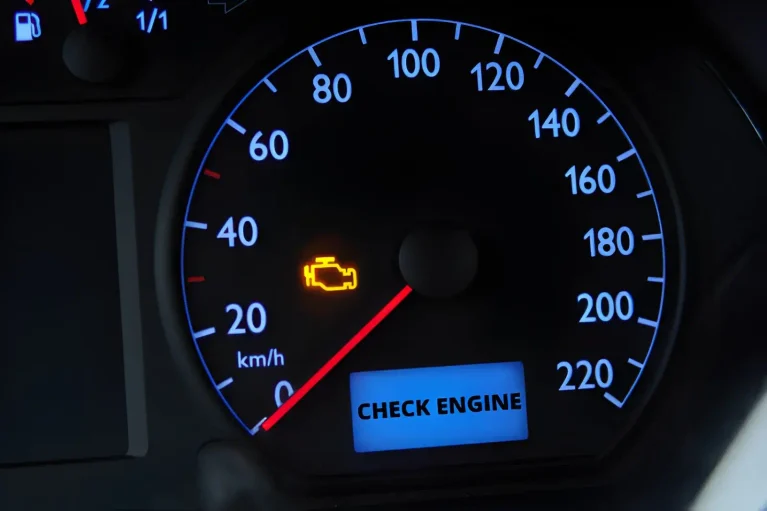
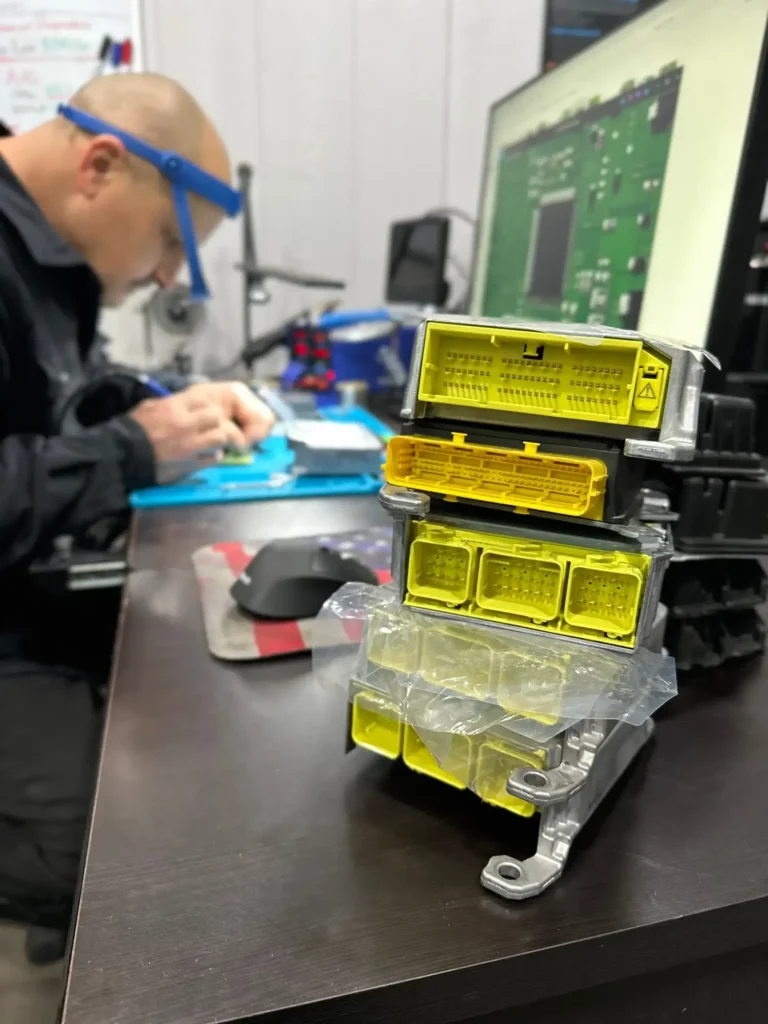
A steering angle sensor reset recalibrates the sensor that tells your vehicle’s stability control system which direction the steering wheel is pointing. Without this reset after certain repairs, the system operates on outdated position data and cannot correct the vehicle properly during a skid or emergency maneuver. The result is a traction control warning light, a stability control warning light, or both staying on with the systems disabled. The reset takes 5 to 15 minutes with a professional scan tool and costs $50 to $150 as a standalone service.
This guide explains what the sensor does, when a reset is required, what happens if you skip it, and what it costs.
What Is a Steering Angle Sensor and What Does It Do?
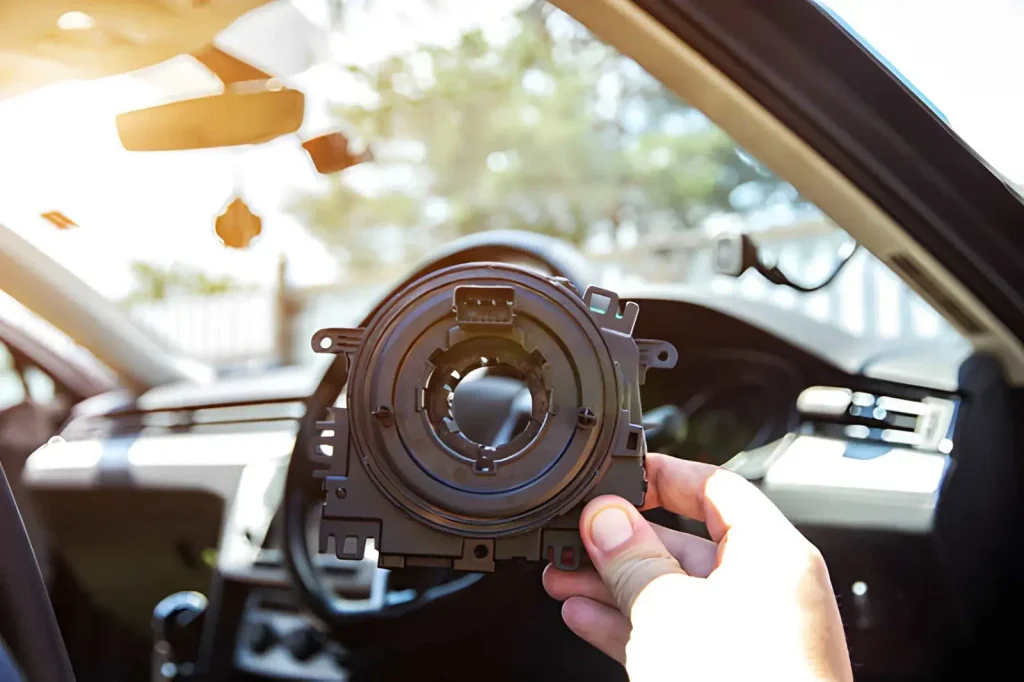
The steering angle sensor is an electronic device mounted on or near the steering column, usually behind the steering wheel or integrated into the clock spring assembly. It measures the exact rotational position of the steering wheel in degrees and the speed at which you turn it. This data feeds directly into the electronic stability control system, which uses it alongside inputs from wheel speed sensors, the yaw rate sensor, and the lateral acceleration sensor to determine whether the vehicle is going where the driver is pointing it.
When the stability control system detects a difference between where the steering wheel is aimed and where the vehicle is actually heading, it applies individual brakes and reduces engine power to correct the slide. This happens in milliseconds during a skid, a sudden lane change, or a turn taken too fast on a wet road. The steering angle sensor is the reference point for all of these corrections.
The sensor stores a zero-point calibration that corresponds to the steering wheel’s dead-center position when the front wheels are pointed straight ahead. Every measurement it takes is relative to that zero point. When something changes the relationship between the steering wheel position and the front wheel direction, like a wheel alignment, a suspension repair, or a steering rack replacement, the stored zero point no longer matches reality.
What Does a Steering Angle Sensor Reset Actually Do?
A steering angle sensor reset clears the old zero-point calibration from the sensor’s memory and writes a new one based on the steering wheel’s current straight-ahead position. The technician connects a scan tool to the OBD2 port, accesses the stability control module, and initiates the recalibration procedure. On most vehicles, the process requires the steering wheel to be centered with the front wheels pointed straight, then the scan tool writes the new zero point and confirms the calibration.
Some vehicles use a self-learning reset where the technician initiates the procedure through the scan tool and then drives the vehicle in a straight line at low speed while the system recalibrates itself automatically. Other vehicles require a static reset where the vehicle stays parked and the technician turns the steering wheel lock to lock while the scan tool records the full range of motion. The method depends on the manufacturer, and using the wrong procedure can leave the calibration incomplete.
After the reset, the stability control system recognizes the new center position and all of its calculations adjust accordingly. The traction control and stability control warning lights turn off if the misaligned sensor was the reason they were on. The entire process takes 5 to 15 minutes with the right scan tool and does not require removing any parts from the vehicle.
That Dashboard Light Will Not Fix Itself
Airbag warnings, electrical faults, and AC failures get worse the longer you wait. Send us your vehicle details and we will have a quote ready before your next drive.
When Does Your Vehicle Need a Steering Angle Sensor Reset?
Four common situations require a steering angle sensor reset. Here is each one and why skipping the reset causes problems.
1. After Wheel Alignment or Suspension Work
A wheel alignment changes the direction the front wheels point relative to the steering wheel position. After the alignment, the wheels may track perfectly straight, but the steering angle sensor still holds the old zero point from before the adjustment. The system now thinks the steering wheel is slightly off-center even when it is perfectly straight, which triggers a stability control fault.
Suspension work that changes ride height, camber, or toe angle has the same effect. Replacing control arms, tie rod ends, struts, ball joints, or sway bar links can all shift the steering geometry enough to require a reset. Any shop performing an alignment or suspension repair should include the steering angle sensor reset as part of the job, but not all of them do.
2. After a Collision or Accident
A collision that impacts the front end, the steering system, or the suspension can physically shift the steering geometry and damage or jar the sensor itself. Even a minor fender bender that does not deploy the airbags can move things enough to throw off the sensor calibration. The stability control warning light appearing after an accident is one of the most common post-collision symptoms alongside the airbag light.
An airbag module reset is often performed at the same time because the SRS module stores crash data during the same impact event. Resetting both the airbag module and the steering angle sensor together restores the vehicle’s safety systems in a single visit rather than splitting the work across multiple appointments.
3. After Battery Disconnect or Module Replacement
On some vehicles, disconnecting the battery or replacing a control module erases the steering angle sensor’s stored calibration. The module loses its learned zero point and defaults to an uncalibrated state, which triggers the stability control warning light on the next drive cycle. This is especially common on vehicles where the steering angle sensor data is stored in the stability control module rather than in the sensor itself.
Replacing the engine control module, the ABS module, or the stability control module can also require a reset because the new module has no stored calibration data from the vehicle it was installed in. Any time a module that communicates with the stability control system is replaced or reprogrammed, a steering angle sensor reset should be part of the final verification process.
4. After Steering Component Replacement
Replacing the steering rack, the steering column, the intermediate shaft, or the clock spring changes the physical relationship between the steering wheel and the front wheels. A new steering rack may have a slightly different center position than the old one. A new clock spring may seat the steering wheel at a marginally different angle. These small differences are enough to offset the sensor’s zero-point calibration.
Power steering pump replacement on hydraulic systems does not typically require a sensor reset because the pump does not change steering geometry. Electric power steering motor replacement, however, often does because the motor and the sensor share the same housing on many vehicles and the replacement process resets the motor’s internal calibration.
What Happens If You Skip a Steering Angle Sensor Reset?
The most immediate consequence is a traction control light and a stability control light staying on permanently. While these warning lights are on, both systems are disabled. Your vehicle loses its ability to apply individual brakes during a skid, reduce engine power during a loss of traction, and correct understeer or oversteer during emergency maneuvers. The vehicle drives normally under regular conditions, but in the one situation where you need these systems most, they will not respond.
Some vehicles also disable cruise control and other driver assistance features when the stability control system is offline. Adaptive cruise control, lane departure warning, and collision mitigation systems on newer vehicles depend on accurate stability control data to function. A skipped steering angle sensor reset can cascade into multiple disabled systems beyond just traction and stability control.
An uncalibrated steering angle sensor can also cause the stability control system to intervene when it should not. If the sensor’s stored zero point is off by several degrees, the system misinterprets normal driving as a slide and applies brakes or cuts engine power when the vehicle is actually traveling in a straight line. This phantom intervention is both uncomfortable and dangerous, especially at highway speeds. Toki Auto Works performs auto electrical diagnostics in California with OEM-level scan tools that calibrate steering angle sensors correctly the first time, alongside every alignment, suspension job, or post-collision repair that requires it.
Frequently Asked Questions
Q. How much does a steering angle sensor reset cost?
A standalone reset costs $50 to $150 depending on the shop and the vehicle. Many shops include the reset as part of a wheel alignment or suspension repair at no additional charge.
Q. Can I reset the steering angle sensor myself?
Some vehicles allow a DIY reset by turning the steering wheel lock to lock and then driving in a straight line. Most vehicles require a professional scan tool to access the stability control module and initiate the calibration procedure.
Q. Does a wheel alignment always require a steering angle sensor reset?
Not always, but most modern vehicles with electronic stability control require it after any alignment that changes toe angle. If the traction control or stability control light comes on after an alignment, the reset was either skipped or done incorrectly.
Q. How do I know if my steering angle sensor needs a reset?
A traction control warning light, a stability control warning light, or an ESC off warning light that appears after an alignment, suspension repair, collision, or battery disconnect is the most common indicator.
Q. Can a bad steering angle sensor cause car electrical problems beyond stability control?
Yes. A faulty sensor can trigger fault codes in the ABS module, the stability control module, and in some vehicles the power steering module. Multiple warning lights appearing after steering or suspension work often trace back to the steering angle sensor calibration rather than separate failures in each system.
Get a Straight Answer Before You Spend a Dollar
No guesswork, no upsell. Tell us the problem and we will run it through the same OEM software your dealership uses, then give you an honest quote. Family owned, 5.0 stars, 128 reviews.